Wednesday, November 18, 2009

CI 5475 Week 12: More on Elements of Visual Rhetoric & Design

READABILITY ANALYSIS

Although I'm certainly biased as a long-time employee at the UMN's Center for Writing, I perceive the C4W website to embody a HIGH degree of readability. Before I begin analyzing the site in more detail, check it out for yourself at:

http://writing.umn.edu/

In chapter 8 of their text Teaching Writing Using Blogs, Wikis, and other Digital Tools, Beach, Anson, Breuch, and Swiss (2009) argue that one major difference between how readers process digital vs. print texts involves an active, non-linear search for relevant information that fulfills unique purposes or needs:

"One of the differences in how audiences process online versus print texts has to do with their purposes of reading online texts. When audiences go online, they are often looking for certain information -- the latest news reports about a political campaign, movie ratings, sports scores, book purchases, medical advice, and so on. In contrast to reading print texts, in which reader's eyes move from left to right and process information in a linear manner, when reading online texts, readers' eyes focus initially on whatever information is most relevant to their purpose or needs" (166).

UMN Students, faculty, and staff visiting the C4W website will most likely have the following purposes / needs in mind when dropping by including: scheduling a visit with a student-peer writing consultant, scheduling a visit with a faculty-peer writing consultant, obtaining information on the Minnesota Writing Project, obtaining information on upcoming writing-related workshops and events, obtaining C4W staff contact information to pose further questions, and so on.

Pictured left, the MAIN page for the UMN's C4w absolutely nails this concept of relevancy as information relevant to UMN visitors' anticipated purposes / needs is clearly displayed in a series of vertical columns on the left and right sides of the page. For example, in the case of a UMN student visiting the site with the purpose / need of making a student-peer writing consultation, the "Student Writing Support" link and short description quickly provides the relevant information they are looking for. Similarly, in the case of a UMN faculty member visiting the site with the purpose / need of learning WHAT we do at the center for writing, HOW we do it, and HOW LONG we've been doing it, the "Mission and History" link quickly provides the relevant information they are looking for.

Beach, Anson, Breuch, and Swiss (2009) continue their discussion on readability as they offer another key variable to comprehending online texts - a logical organizational schema for understanding the relationships among different sections of a text:

"It is... important that the titles or subheads be retained in the same place on different pages so that audiences know where to look to determine a page's content. On our wiki resource site, the side bar with chapter titles is constant on all pages" (167).

In other words, if there is not a logical and consistent structure ACROSS pages, readers will quickly become lost as they navigate links.


Notice how the C4W's "Student Writing Support" link reproduces the structure and overall organizational schema as established on the MAIN page: page header to inform the reader what specific page they are on, series of columns on the left tailored to anticipating and quickly fulfilling the readers' purposes / needs, similar minimalist color scheme, similar use of white space, similar font scheme, and so on and so forth. In other words, if a UMN student visits the C4w site to schedule a student-peer writing consultation, they most likely will NOT get lost in the mix. Instead, they will click on the "Student Writing Support Link" on the MAIN page, and then proceed to click on the "Make an Appointment" link located in a similar position on the NEXT page.


In contrast to the UMN's C4W website, I don't perceive the Dave Matthews Band's official website to be quite as readable given the above standards. Before I begin analyzing the site in more detail, check it out for yourself at:

http://www.davematthewsband.com/

When I visit the Dave Matthews Band's website, I have purposes / needs in mind including: purchasing music and merchandise, learning about upcoming tour dates, learning about upcoming DMB television and media appearances, learning about the latest DMB news, and so on and so forth.

Although all of this detailed information is present on the website's MAIN page, I have a much, much harder time quickly finding information relevant to my search than I do on the C4W website. Despite the page header bar clearly displaying each of these pieces of information in all capitalized, bold-faced type (e.g., HOME, NEWS, HISTORY, SIGHTS, SOUNDS, STORE, and so on), my eye gets absolutely lost among the tiles of pictures, banners, and subsections comprising the main page. In the hopes of creating a colorful and visually complex website, I feel as though the designers sacrificed some usability here. After all, especially in web design, simpler is often better!


Aside from sub-pages reproducing the header bar as established on the MAIN page, subsequent pages vary organization schemas, often drastically. In this case, look at how this completely horizontal strip of images contrasts with the tile-shaped images as displayed on the MAIN page.

And again, the amount of color and art design on this subsequent page is absurdly complex and distracting. Beach, Anson, Breuch, and Swiss (2009) speak to this absolute saturation of information and color as they state, "Too much text information, information located in too many different font sizes, a confusing use of background color or font color, or a misuse of banners or columns can limit easily locating relevant information... They [students] are then using white space itself to help readers focus their attention on significant information" (166-168). Where the C4W's website effectively utilizes minimalist colors and large amounts of white space to guide viewers' focus across the page, the DMB's website contains virtually no white space at all! As a result, I feel as though I'm forced to focus more on the bizarre mushroom-filled field than on the band-related content!

----------------------------------------

ACTIVITIES

The first sort of activity that came to mind is a sort of design element "scavenger hunt." Either before, during, or after various elements of design are covered in class, students could be given the task of finding X number of sites per specific design elements. For example, students could be given the task of finding 2 sites that use WHITE SPACE effectively and 2 that do not. As a final step, students could quickly (and I'm thinking in a few sentences here), analyze and describe HOW and WHY each site is either effective or not given its use of each element in the scavenger hunt. NOTE: This type of activity could afford an interesting application of DIIGO. For example, instead of students recording the name of and / or printing of examples of each site they find during their scavenger hunt, they could simply favorite the site, annotate it, and share it with you as the instructor and the remainder of the class! This would also afford students ability to place annotations and discussion DIRECTLY ON certain design elements.

Another activity that came to mind is having a contest of who can design the "best" and "worst" websites given elements of design as discussed in class. In teams or individually, students could either story board the website if they do not have access at home, or actually create the site using Google sites if they do. Students could then write a similar short analysis (again via hard copy or Diigo) exploring the HOWS and WHYS behind their site's effectiveness, or lack there of, given specific elements of design.

Of course, teaching and modeling responsible online use will be absolutely key to the success and acceptance of these sorts of assignments.

----------------------------------------

POWER POINT PRESENTATION

Fellow nerds (you'll see what I mean in a second)... my trial run with the wildly non-linear (and non-intuitive!) Prezi presentation tool.

Sunday, November 15, 2009

CI 5150 Week 10 - Critical Analysis of Toys as Status Quo Training Tools

GENERAL INTRODUCTION

In his blog entry titled "Toys: Nature vs. Nurture," fellow CI 5150 student Scott
of particular toys is rather suggestive of gender roles." Although I agree with the argument that toys do indeed both reflect AND shape gender roles, I would like to extend Scott's initial exploration even further into the "shaping" end the spectrum, arguing that critical analysis of any department store toy aisle reveals a large degree of intentionality on the parts of designers and marketers to design, produce, and market toys that function primarily as "status quo training tools" (gender being one of many, many interlocking status quo variables), or in other words, status quo "shapers."

Where my previous blog entries for this course have been largely theory-based and expository in nature, I would like to explore my argument that critical analysis of any department store toy aisle reveals my aforementioned notion of
intentionally in toy design, production, and marketing by...

1.) designing an ethnography-esque assignment that is an application-based exercise in critical gender analysis of toy design, production, and marketing

and

2.) modeling what such an assignment might "look like" for student use.

ASSIGNMENT DESCRIPTION

Again, as stated above, it can be argued that toys are
intentionally designed, produced, and marketed to shape many, many interlocking status quo variables including race, class, and so on and so forth; however, the following ethnography-esque, application-based assignment will begin to scaffold such a complex deconstructive critical analysis by "singling" out and starting with the status quo variable of gender.

STEP ONE


As I've stated in nearly all of my blog entries throughout the course thus far, provide your students with whatever background context is necessary for YOUR unique learning context.

However, I recommend starting with the core idea and argument that like any piece of culture, toys are
intentionally utilized by those in power as yet another medium to transmit and otherwise "teach" dominant, pervasive status quo ideologies, assumptions, values, world views, and so on. To begin to explore this concept of intentionality, as well as practice critically revealing and analyzing this intentionality in as CONCRETE vs. abstract of a way as possible for students, teachers could begin with potential scaffolding activities such as:

OBJECT BIOGRAPHY

-Have students dig through their closets, attics, under their beds, junk drawers, and so on to find a memorable / beloved childhood toy.

-Bring the toy to class for group discussion.

-In pairs, small groups, and / or large groups, have students critically analyze their toys via questions such as...
  • What sort of games did I use this toy with?
  • How did I use this toy?
  • What might this toy have taught me?
  • How might this toy have taught me these things?
  • What ideologies, assumptions, values, world views, and so on does this toy appear to be supporting?
  • How does this toy appear to be supporting these things?
VIEWING REAL WORLD ADVERTS

-View collections of clips such as the following:


-Respond to similar a similar question set of...
  • What ideologies, assumptions, values, world views, and so on does these toys appear to be supporting?
  • How do these toys appear to be supporting these things?
-Decompress as a large group in whatever way is appropriate for YOUR particular learning context, informing students that they will replicate / apply this sort of critical analysis out in the "real world"!

STEP TWO

And here comes the fun part...

-Equip your students with digital note taking tools (NOTE: I don't really foresee quality being an issue here. For instance, I imagine even low-end cell phone recording equipment doing the trick. However, if students have higher-end equipment at their disposal, more power to them).

-Split students up into small groups (I'm thinking 4-5 students per group), and assign each group to visit a toy department in a nearby store (NOTE: depending on students' transportation situations and proximities to nearby stores, this step could present difficulties. To manage potential problems, perhaps develop and post some sort of car pool grid to help facilitate and organize travel. Also, perhaps perform and post a simple Mapquest, Google Map, and / or Google Earth search of all nearby stores with toy departments for planning purposes).

-In their small groups, have students...
  • visit the store they choose / are assigned
  • select X number of toys that they believe function as "status quo training tools" (depending on YOUR unique class context, I'm thinking of 4-6 toys per group for this assignment)
  • photograph said toys so that box art and marketing is as visible as possible
  • take digital and / or analog field notes recording:
1.) WHAT type of marketing is being used, HOW it is being used, WHAT type of effect / purpose it is being used to achieve, HOW it is achieving that effect / purpose, and so on

2.) WHAT ideologies, assumptions, values, world views and so on the toy is transmitting, HOW it is transmitting these ideologies, assumptions, values, world views, and so on.

STEP THREE

-Utilizing their field notes, have each group prepare a multi-modal presentation to explore and argue WHAT status quo ideologies, assumptions, values, world views and so on their selected toys are being used to transmit, as well as HOW they are transmitting them.

*This presentation could take on really whatever sort of form you feel is appropriate to YOUR unique class context. For example, students could use PowerPoint, iMovie, Voicethread, as well as any number of other utilities to build their presentations.

*Regarding assessment, I find it reasonable to require students to pair a MINIMUM of 3 descriptive text or spoken sentences per image, depending of course on what sort of medium they use to present their findings. FOR THE PURPOSES OF THE BELLOW MODELING, I will be pairing ~ 3 descriptive text sentences per image. However, overall assessment depends again on YOUR unique learning context and expectations. Good luck, and have fun!

ASSIGNMENT APPLICATION

For the purposes of the modeling portion of this week's entry, I will be restricting my critical analysis to how a number of toys currently on store shelves transmit gender-specific status quo ideologies, assumptions, values, world views, and so on.

The bellow examples are my best approximations what this assignment might "look like" having never done it. Feel free to appropriate and adapt however you see fit!

----------------------------------------


Pictured to the left is Handy Manny, star of the Disney Channel program Handy Manny. As indicated by the "Handy Manny" Wikipedia entry, the general episode formula for the popular children's program is the following: 1.) a resident of the fictional town of "Sheetrock Hills" contacts Manny's repair shop with a problem that needs fixing, 2.) Manny and his band of anthropomorphized tools set out to fix said problem, and 3.) Through teamwork, Manny and his team are successful.

One major ideology that Handy Manny transmits and teaches children is that men are "meant" to fulfill / it is "natural" for men to fulfill the authoritative role of worker / builder / maker in society. In other words, when there is something that needs fixing, Handy Manny helps to further invest men with the perceived authority / expertise / credibility that others seek out when something needs fixing. One way in which the product's marketing contributes to this message is the phrase "Let's get to work!" printed directly on the toy's packaging. As children pass by this toy and read this quotation (if they can in fact read), this direct address invites children and parents to further identify with Manny and the ideologies he represents as they play "handyman" with him.


Pictured to the left is the Fisher Price Play My Kitchen. One major ideology that Play With My Kitchen transmits and teaches is that women are "meant" to fulfill / it is "natural" for women to fulfill the submissive role of domestic processor in our society, while the dominant male (e.g., Handy Manny) is out gathering resources to process. In other words, when there is some sort of domestic need that needs processing (e.g, cooking), Play My Way Kitchen helps to further invest women with the perceived authority / expertise / credibility when dealing with domestic matters. Although textual marketing is scarce on this product, the visual says it all as an EXTREMELY young child is smiling and expressing emotions of happiness and relaxation with her domestic task at hand.


Pictured to the left is the Circo Cheerleader Dress. Enough said... One major ideology that the Cheerleader Dress transmits and teaches is that women are "meant" to be / it is "natural" for women to be objects of desire for the opposite sex. In other words, women are "supposed" to dress revealing / show off their bodies, and women "should" enjoy the feedback they get from men when they are objectified. Notice how marketing on this product is virtually non-existent. Instead, the product itself IS the marketing. In other words, when young girls see this flashy, pink dress, they may automatically associate the toy dress with the attention that "real" cheerleaders get. Therefore, they may beg their parents for the toy dress in order to get the same sort of feedback, and ta-da, the dress sells itself with virtually NO exterior marketing!


Lastly, pictured to the left is the Ryan's Room Knight and Shining Armor complete with helmet, breast plate, sword, and shield. Via the marketing slogan "A suit of armor to fit your brave knight!", one major ideology that this toy transmits and teaches is that men are "meant" to be / it is "natural" for men to be society's warriors / defenders / aggressors. In other words, men are "supposed" to dress masculine / show off their masculinity, and therefore "should" enjoy the feedback they get from being perceived as such. However, notice how differently the male armor vs. female cheerleader outfit is marketed; more specifically, the armor packaging pictures a young boy dressed for battle! This difference in marketing may also transmit and teach the ideology that women are "meant" / it is "natural" for women to enjoy dressing up for idle vanity, whereas men are "meant" to / it is "natural" for men to get dressed up ONLY when there is a particular role / duty to fulfill; in this case, a warrior preparing for battle!

Wednesday, November 11, 2009

CI 5475 Week 11 - Man vs. Mild; Comic Life and Visual Rhetoric

For this week's assignment with Comic Life, I decided to create a short comic to parody the wildly popular (pun intended) Discovery Channel series Man vs. Wild (MVW) starring wilderness adventurer Bear Grylls. For those of you not familiar with MVW, each episode follows a rather basic formula:

1.) Bear Grylls is creatively "dumped" via plane, boat, and / or motorized vehicle into the middle of some vast expanse of nature including deserted islands, rain forests, rivers, desert plains, and so on.

2.) Bear Grylls is "alone" (just ignore the camera crew with him...), and supplied only with the most BASIC survival tools; often only the clothing on his back and a simple pocket knife.

3.) With nothing more than his basic supplies, surrounding environment, and expert knowledge of the wilderness, Bear Grylls narrates various survival techniques as he makes his way back to some form of civilization for rescue. For example, the viewer sees Bear Grylls create shelter, hunt for wild (often dangerous) game, treat wounds, and create signals, boats, and so on out of nothing more than what his immediate environment and expertise affords him.

And you may ask, WHAT IS THE POINT? Well, as Bear Grylls points out at the beginning of each and every episode: "I'm going to show you the skills needed to survive here." So, if I ever find myself in a deserted canyon, river, rain forest, desert, and / or so on and so forth, watching this show will teach me some survival skills, right? Wrong! Reason being: it is HIGHLY unlikely that myself (along with the majority of the "panzified" viewing audience completely adjusted to an extremely "mild" style of life), would be able to put these survival skills into action in the true "wild."

To get a quick glimpse of this formula in action, check out this short clip from an MVW episode filmed in a Copper Canyon, Mexico:

http://www.youtube.com/watch?v=lX09dkEhGRM&feature=PlayList&p=gmQ-KaK054s

For my parody comic titled Man vs. Mild - MN Lakes Edition, I wanted to draw attention to the enormous gap between the urban / suburban-ized and otherwise "controlled" / "mild" environments that 99.99% of the show's viewing audience experiences during their daily existence, and the truly desolate / "uncontrolled" / "wild" environments featured in MVW that said general viewing audience would have NO actual shot of surviving in, regardless of any television-based survival skills they learned before hand.

To begin to accomplish this task, I first wanted to contrast the senses of openness, freedom, isolation, and so on which viewers vicariously experience when watching MVW, with the boundaries / limits viewers experience in their realities. After digging through my collection of nature-themed photography, I selected a number of images of myself kayaking on Silver Lake in North St. Paul, MN, which is one of the smallest lakes in the metro area. In contrast to the vast openness of the enormous canyon Bear Grylls treks across in the above clip, these photos of Silver Lake communicate much more confining boundaries / limits (you can see the shore line in the photos!)

Next, I wanted to contrast the often wild and dangerous game Bear Grylls has to hunt down in order to nourish himself, with the fast food drive-through window much of the general viewing audience depends on for sustenance. In contrast to the dangerous wild bores Bear Grylls traps, kills, cooks, and eats with his bare hands, I portray the comic book character "hunting" one of Minnesota's most common animals; the goose. In contrast to a wild bore having an exotic and / or dangerous connotation, the images of the geese may express irritation (after all, geese = tremendous amounts of goose poop to potentially step in), but hardly express any sense danger or risk. Lastly, I refer to the geese as "unprocessed chicken nuggets" to further remind the general viewing audience that all of their food is basically trapped, killed and cooked for them, and that they would have NO shot at survival if actually placed in a similar situation as Bear Grylls, regardless again of any television based survival tips.

Lastly, I parodied my character's narrative style of speech to match that of Bear Grylls's as closely as possible. As you can hear via the above clip, Bear Grylls speaks in patterns of brief, relatively emotionless narrations of his observed surroundings in a charming British accent. For example, even when a wild bore or fish gets away from Bear Grylls, he expresses almost no anxiety or frustration (even though his food supply just took off!). As you can see, I attempt to parody the same sort of emotionless, objective narration, even in the face of my character's only meal of unprocessed chicken nuggets taking flight!

Without further adieu, I give you Man vs. Mild - MN Lakes Edition. (Click on thumbnail for enlarged image).


Overall, there are many differing conventions utilized / operating in reading and creating visual vs. print-exclusive texts. Specific to my Comic Life creation, I argue that creating a sense of perspective in each cell depended almost completely on visuals alone. For example, If I wanted to position the viewer as viewing the main character via their own distanced / outsider perspective, I utilized a picture of the main character himself. However, if I wanted to position the viewer as viewing the textual world through the main character's perspective, I utilized a picture that affords a sort of first person view of the textual world (e.g., the photos of the bow of the kayak as if the viewer themselves are actually sitting in the cockpit!). In short, achieving this sort of perspective via text alone would be much more cumbersome, and much more time consuming. Whereas it could potentially take several paragraphs, or even pages, to write the viewer "into" the seat of the kayak's cockpit, one adequately utilized image can accomplish this task in an instant!

----------------------------------------

TEACHING IDEAS

I honestly can't wait to incorporate programs like Comic Life into my teaching. Like Professor Beach talked about in class, I feel as though this tool would work as a wonderful pre-writing tool to story board movie productions. For example, if students wanted to create a video ethnography of some part of town, they could first visit the location(s) with a still shot camera and take detailed photos. Then, students could load them into Comic Life, annotate them, and begin to build dialogue and movement instructions for later filming.

Also, I think it would be very interesting to have students select text-based characters and create comic strips starring said characters. For example, while reading Ken Kesey's One Flew Over the Cuckoo's Nest, students could create comic strips starring ward members and their battle with mental disorders. While doing this, students could play with perspective, illustrating the textual world via the often unique, warped mental perspectives of various ward members as based on textual ques. For example, after mining the text for evidence, students could represent Chief Bromden as perceiving the ward as the sort of mechanized "combine" that he describes from his mentally unstable perspective. Similarly, after mining the text for evidence, students could represent Billy Bibit as perceiving other patients on the ward as the bunny rabbits he "sees" from his mentally unstable perspective.

IMAGES USED

http://assets.knowyourmeme.com/i/1504/original/bear_grylls.jpg

http://novelinks.byu.edu/uploads/Novels/OneFlewOverTheCuckoosNest/CoverImage.jpg

Monday, November 2, 2009

CI 5475 Week 10 - "Everybody Writes" Episode ONE & Reflection

PODCAST

Bellow is episode #1 of the UMN Center for Writing's unofficial (at least for now) titled podcast "Everybody Writes." NOTE: This project was just a trial run. Enhanced sound quality and editing to come soon.

Click here to listen!

Click here to subscribe OR copy and paste the Bellow URL into your RSS aggregator!

http://mediamill.cla.umn.edu/mediamill/generateRSS.php?podcast_id=499

----------------------------------------

GENERAL REFLECTION

Overall, the technical experience of creating my podcast went very smooth as I am not necessarily a stranger to audio production and editing; since I've started playing instruments and music at a very young age, I've been exposed to and found it extremely interesting to create and manipulate audio productions via software programs of varying complexities including Cakewalk, Sonar, and even Pro Tools. As such, I have gained much experience with the technical AND performance sides of creating, mixing, and editing musical audio compositions.

A little shameless plug...


Although I feel that these pre-existing technical proficiencies were definitely helpful to the audio task at hand, I was relatively shocked to experience how difficult it was to perform an otherwise non-musical, more monologue-esque piece of audio. In other words, where I otherwise do not have a problem composing, performing, and technically manipulating musical and vocal compositions in the form of short songs and instrumentals, I found it very difficult to perform a more non-musical, spoken monologue sort of composition. In fact, I found myself frequently stuttering, losing my train of thought, and getting relatively nervous; an emotion I typically do not experience while performing music.

After reflecting on these shocking differences in my performance (shocking at least from my perspective), I argue that musical and non-musical tasks require different sets of literacies to successfully compose, perform, and manipulate. For example, I typically do not engage in much (if any at all) pre-writing and / or practicing said pre-writing when it comes to my musical compositions and performances. Although I have an extremely rough idea and structure for the end product I aim to achieve, I typically plug myself in, hit the record button, and just play for fear that any more detailed planning may squelch my creativity. However, this practice did not positively translate to my more non-musical, spoken monologue podcast composition and performance. Because I didn't do much (let alone any) practice with the pre-written podcast script that I created before hand, I found it very, very difficult to perform said script in a fluid, engaging, and otherwise "audience friendly" manner. In other words, the creative "wiggle room" that I find so necessary in composing and performing music was not beneficial to the composition and performance of my podcast. The improvisational skills that I feel come so naturally to me in performing music did not come to me while performing my podcast.

In short, given this experience, I have learned that I need to practice more pre-writing and review strategies to build similar performance and improvisational literacies with non-musical, spoken monologues often utilized in podcasts!

----------------------------------------

TEACHING IDEAS

  • Maycomb County Radio Shows

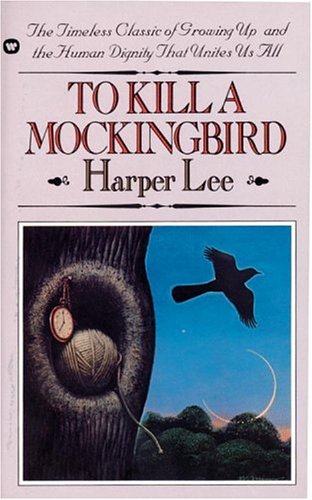
During a unit on Harper Lee's To Kill a Mockingbird, I'd like to have students form small groups to compose and perform short radio shows addressing the various goings on and central issues occurring in Maycomb County throughout the novel. In doing this activity, instructors could also integrate a sort of perspective taking angle by having students adopt certain roles from the text, responding to county issues during their radio show via the voice of their roles. For example, in a given group's radio show, students could address Tom Robinson's trial from the differing perspectives of Bob Ewell, Atticus Finch, or even Tom Robinson himself! Although the form of each podcast does not necessarily have to take the form of a news program, this is the first format that jumped to mind. To explore and decide upon an appropriate format, teachers and students could first sample and explore different sorts of genres including tech talk, educational talk, various news reports, and so on; whatever genres teachers feel are relevant to the novel. Students could then practice the podcasting literacies I explore above by mining the text for evidence, pre-writing their roles and scripts, practicing this pre-writing, creatively performing it, and later editing it into a final product; their Maycomb County Radio Show.

  • Paperless Research Project; Social Activism & Application

Throughout my teaching program, my colleagues and I have talked extensively about the importance of applying whatever is being learned in class to create change around some sort of relevant, real world issue. I see no better vehicle for accomplishing this application-based task than using podcasts.

For example, as part of a research project, students could create podcasts vs. traditional research papers on any given issue for their final product / summative assessment. Via the creation of specific segments in their podcasts, students could demonstrate the research they have done, their overall understanding of the material, as well as USE their research to create a REAL broadcast to inform, convince, and persuade audiences around a given issue. If students perceive that they are writing for a larger audience who will ACTUALLY care about what they have to say than just the teacher, perhaps students will be more motivated and engaged with the research topics they chose. I know I would be! Too bad podcasting wasn't necessarily around when I was completing my k-12 education!

IMAGES USED

http://upsenglish.files.wordpress.com/2009/04/harper-lee.jpg

Sunday, November 1, 2009

CI 5475 Week 9 - "Everybody Writes" Podcast

As I am currently a Graduate Writing Consultant at the University of Minnesota's Center for Writing, I plan on designing a podcast to be utilized as an outreach tool for the C4W. Because the clever advertising slogan for the C4W is "Everybody writes: we'll help you get better at it," I thought it equally clever to appropriate a shortened version of this slogan for the podcast's title - "Everybody Writes."

As an outreach tool, I envision the target audience of this podcast to be the University of Minnesota students, staff, and faculty that utilize /may potentially utilize the C4W and its many services. Overall, I plan on designing this podcast as a sort of one stop shop for listeners to quickly acquire information, news, goings on, upcoming events / workshops, and so on taking place at the C4W. In addition to myself acting as the show's "host" to deliver this information, additional C4W staff and faculty can appear as "guests" on the show.

Bellow is a tentative script that I believe will help me fulfill the aforementioned purposes.

----------------------------------------

University of Minnesota Center for Writing Podcast aka "Everybody Writes."

GENERAL INTRODUCTION

-Let intro theme play for ~15 seconds

"Welcome to week 9 of Fall Semester Gopher writers! Rick Filipkowski here with episode ONE of the University of Minnesota's Center for Writing Podcast "Everybody Writes."

Just to give you a bit of background about myself, I have been working as a writing consultant at the Center for Writing for going on 4 years now - 2 as an undergraduate English major, and 2 as a graduate student in the English Education M.Ed. program.

Anyways, enough about me, on to the rest of the show!"

NEWS

-mySWS successfully up and running.


"At the start of this current fall semester of 2009, the C4W launched a new web-based application accessible through the UofM student portal, as well as the Center for Writing's website at the usual writing.umn.edu.

Before the launch of mySWS, students were required to speak to SWS staff in order to make changes to their appointments. Now, once logged in to mySWS, students have the capability to create appointments, cancel appointments, reschedule appointments, and see future, as well as previous, visits to the C4W.

And mySWS provides students with more features than just the ability to manage their SWS appointments. To tell you more about the portfolio nature of mySWS, I sat down with Kirsten Jamsen, the Director of the UofM Center for Writing and co-designer for the mySWS application
This is what she had to say:

-Run Skype interview.

-Changes to SWS Online

"And now on to the second piece of news... For those of you who have previously used SWS.Online, the application has undergone a major change to benefit you as a writer.

Previous to this semester, student writers were unable to further revise their writing once submitted to SWS.Online. Now, writers are able to re-submit their writing up to 2 hours before their scheduled chat appointment with their SWS.Online consultant.

Have more revisions? Well then keep writing. As much as you want. Remember, you can upload any revisions you have up to two hours before your schedule appointment time!"

-Return of old consultants

"And finally, some of your favorite former SWS consultants who had to say goodbye to the Writing Center upon their graduation are back! They're happy to be back, and we're happy to have them! So, stop in and help welcome back Grant, Miranda, John, Emily, Brad, and Maggie, and schedule your visit with them today!"

UPCOMING EVENTS

"In addition to the return of these consultants, there is a lot going on during the month of November at the Center for Writing Teaching With Writing Program, here are some of the upcoming highlights:

Instructors and TAs

  • On Wednesday, November 4th, from 12:00 to 1:30 pm, a panel discussion will be held on the topic of responding to graduate student writing. As described on the Teaching With Writing website, "This session convenes a panel of experienced faculty members who will share their own approaches to giving feedback and comments to graduate students they work with, attending to issues that include committee politics, non-native speaker concerns, and professional development."

  • On Thursday, November 12th, from 12:00 to 1:30pm, a panel discussion will be held on the topic of teaching with digital writing. As described on the Teaching With Writing website, "In this interactive workshop, we will consider a variety of tools that might be appropriate for your specific assignments and students, and think with you about the ways in which wikis, blogs, social networking apps (Facebook, Twitter, Ning), course management software (Moodle, WebVista), document-sharing and co-authoring programs, online document mark-up tools, chat tools, clickers, and a slew of others can support the work you do with student writing."

To register for your seat, as well as explore additional upcoming events, please visit the Center for Writing's Teaching With Writing website at writing.umn.edu/home/events.

GENERAL OUTRO

-Play outro theme

"Alright Gophers, that's all for the week 9. Thanks for tuning into "Everybody Writes." And remember, we'll help you get better at it. Bye now!

Thursday, October 29, 2009

CI 5150 Week 8 - Edible Popular Culture;The Food Network

PART ONE - READING RESPONSE

In their essay titled
"Popular Culture and the Dark Side of Food," Walker and White (2008) propose the argument that the human constant of food is yet another popular culture artifact both reflective of, as well as shaped by, dominant American (or arguably global) cultural ideologies:

"Food is a window into culture; it allows us to experience and sample cultures different from our own without leaving our homes; it serves as a means of transporting, transforming, and maintaining cultures. According to many, food is culture. Catherine Manton refers to to food as everyone's first language... Food is necessary for all cultures to survive; to live, people must eat... Food, consumerism, media, and the power of big business have a complicated and multifaceted relationship in American culture; separating them is difficult" (131).

Nowhere is food's multifaceted relationship to popular American / global culture and the media more explicit than on the Food Network, a cable television network where round the clock programming is devoted to a single topic; food! On the surface, the Food Network arguably works to challenge American (and arguably global) society's current obsession with figure, image, weight, and dysfunctional eating patterns, instead broadcasting the more subversive message that it is "O.K." for Americans and viewers to eat and enjoy food (Walker and White, 2008, 132). However, close, critical analysis of the Food Network's programming, particularly male vs. female on-air chef personalities, may reveal a much less than subversive message; the thin body is still the
ideal body. In other words, upon close, critical examination, the Food Network arguably continues to further deleterious ideological paradigms equating individual power and control, especially for females, with body size, favoring of course thinness (e.g., the thinner you are, the more power and control over that power you have) (Walker and White, 2008, 134).

Although Walker and White (2008) do not explicitly say so in their text, I argue that linguistic discrepancies / double standards between how men and women are perceived depending on their body figure / image helps lay bare various underlying ideologies. Therefore, this discrepancy can be illustrated via the common language we use to refer to men and women of various sizes. For example, a man on the "overweight" end of the spectrum is usually referred to via language with MORE affectionate, gentle, and overall positive connotations such as "husky," "strong," "cuddly," and so on. Conversely, a man on the "underweight" end of the spectrum is usually referred to via language with MORE negative connotations such as "scrawny," "weak," "gangly," and so on. In other words, the very language we use constructs the
ideal male figure / image as leaning toward the larger end of the weight spectrum, as male weight is connotatively associated with great personal control, power / will power, care of oneself, as well as great authority, credibility, expertise, and so on.

However, the exact opposite appears to be the case for women. For example, a woman on the "overweight" end of the spectrum is usually referred to via language with MORE negative connotations such as "chubby," "fat," "thick," and so on. Conversely, a woman on the "underweight" end of the spectrum is usually referred to via language with MORE affectionate, gentle, and overall positive connotations such as the department store favorite "petite," as well as "thin," "small," "little," and so on. In other words, in contrast to men, the very language we use constructs the
ideal female / image as leaning toward the smaller end of the weight spectrum, as female weight is connotatively associated with poor personal control, power / will power, care of oneself, as well as poor authority, credibility, expertise, and so on.

For a television network devoted to nothing but food, talking about food, eating, talking about eating food, enjoying, and talking about enjoying food (you get the gist), the Food Network doesn't appear to be doing much to break down, challenge, and otherwise subvert dominant ideological constructions of the
ideal male vs. female figure / image. Instead, the Food Network appears to reinforce and perpetuate dominant, pervasive ideological paradigms as the on-air chef personalities further construct the aforementioned dominant gender discrepancy / double standard. In other words, the male chefs tend to be large, masculine figures, and the female chefs tend to be thin, feminine looking figures.


For example, meet Italian chef Mario Bitali who is featured in Food Network programs such as the explosively popular
Iron Chef and Meet Mario Bitali.

Although not "obese," Mario is no doubt a portly man. In combination with this particular pose, Mario's size conveys the connotative associations of power, authority, expertise, and credibility over his trade; cooking.

However, Mario still appears soft in a certain way, almost "jolly."


Similar examples include Chef chef Paul Prudhomme
as well as the likewise wildly popular Emeril Lavigne. BAM!


Overall, the portly figures / images of these on-air chef personalities reinforce the message to viewers that men like to eat, and they should eat and enjoy their food as it will make them bigger, stronger, more masculine, and so on.


In contrast, various on-air female Food Network chefs appear to send a different, and much less subversive message to viewers.


For example, meet Italian Chef Giada de Laurentiis. In contrast to her portly and "overweight" male culinary peers, Giada is arguably the definition of the ideal female figure / image; she is thin / petite, white, and otherwise absolutely beautiful. In fact, I know many individuals that watch Giada's show just for her shocking beauty. In fact, they probably have absolutely NO idea that the show is about an otherwise boring and uninteresting subject to them; cooking!

In contrast to our male chefs' portly sizes connoting a sense of authority, power, control, expertise, credibility, and so on over their culinary trade, Giada's thin size similarly connotes her identity as an expert chef; the standard is completely reversed. In other words, if Giada was the same size and / or had the same body figure / image as Mario, Pual, and Emeril, would viewers "buy" her as a competent chef in complete control over her culinary trade?

As a result of her four, count 'em FOUR, shows on the Food Network (Most Popular Recipes, All About Giada, Everyday Italian, and Giada at Home), Giada's image has further transformed / been transformed into a pseudo porn vixen to perhaps further convince viewers that yes, she is in control of and an expert with the food she cooks. See for yourself!


Now readers, I have some news for you that I am sure will not come as a surprise... If you eat to not only survive, but truly enjoy the types of delicious Italian food that Giada cooks across her 4 shows, you WILL NOT have the figure / image of Giada, no matter how hard you try. Similarly, eating these types of food WILL NOT be the way to model stardom.

Again I ask you - if Giada did not have this type of ideal feminine figure, would viewers invest her with the same amount of authority, power, control, expertise, credibility, and so on over her culinary trade? Furthermore, would viewers be as interested in seeing (or perhaps more intense, requiring) a similar chef-to-model transformation with our friends Mario, Paul, or Emeril in a magazine such as Playgirl?


As Walker and White (2008) state, "The role of the media cannot be overlooked or underestimated in the creation of the ideal female body. Popular television glorifies this as sexy, successful, and happy" (134). And as I've worked to explore throughout this blog entry, even a media network concerned with cooking, eating, and enjoying food is not "immune" to the perpetuation of dominant, gender-based ideological paradigms. And if you ask me, this is an EXTREMELY wasted opportunity! Via the incorporation of female chefs more representative of their actual audiences, the Food Network COULD HAVE dealt a potentially effective and subversive blow to the dominant ideological paradigms that the ideal male figure / image is the husky man, and the ideal female figure / image is the thin woman.


And don't get me wrong, the Food Network does in fact include some of these more subversive on-air chef examples. Take Paula Deen who is featured in five, count 'em FIVE, Food Network programs (Most Popular Recipes, All About Paula, Paula's Best Dishes, Paula's Home Cooking, and Paula's Party). In contrast to the thin and model-esque Giada, Paula is a much more "average" looking woman more reflective of her actual television audience. Also, Paula is actually seen eating and enjoying her food vs. sensually playing around in it! In contrast to Giada, this potentially sends the more subversive message to average female viewers that it is in fact "OK" to not only cook, but actually eat and enjoy food! Oh, and just another tid-bit of information... Although Puala may not be considered as youthful, beautiful, and so on to many audiences, she is still wildly, and I'm talking WILDLY successful as an on-air chef personaility, earning millions upon millions of dollars throughout her career, as well as branching out in other media outlets including print.


Given the media and popular culture's ability to not only reflect, but actively shape the ideologies, assumptions, values, world views, and so on that we internalize as a global people, I argue that REAL global change can be made via critical analysis and revision of the messages media and popular culture sources output. In the specific case of the Food Network, perhaps including more on-air chef personalities not only EATING and ENJOYING the food that they make, but actually representative of the viewers that they are cooking for in figure and image, would at least be a start in shifting our ideological paradigms for the better, and literally healthier. But, I'm betting that the magazine that Giada modeled for sold a lot, and I mean A LOT of copies. However, we have to ask ourselves a central question- What is more important? Making short term profits? Or creating a society where people's success and perceived levels of power, control, expertise, credibility, are not defined by their body figure / image?

Unfortunately, although I imagine that you and I don't have trouble arriving at an answer to this question, our response will ALWAYS be at a conflict with corporate profit interests. Until this conflict changes, many men and woman will spend hours cooking a meal, but later feel too guilty to eat and enjoy it. And might I had, food is just a metaphor here. The overall implications this discussion of food has to our global society are much worse. But, that's another blog entry!

----------------------------------------

PART TWO - ASSIGNMENT

Although this isn't my original idea, it's a great one, and I hope you find it beneficial!

In Professor Rick Beach's CI 5475 Digital Writing class, we recently discussed the use of mobile, digital note taking tools that allow students to take detailed, mult-modal field notes. Although this list is by no means comprehensive, some of the digital note taking technologies we discussed and actually used in class (more on that in a minute) included cell phones to take and transmit digital textual notes, digital photographs, audio samples, and videos; digital cameras to take photographs and videos; digital audio recorders to record of course audio; GPS devices to record the exact position of note taking, and so on.

In order to then practice using these digital note taking tools, Professor Beach then gave us the following ethnography-esque assignment that deals with this week's chapter on food and popular culture. In short, I definitely plan on using this assignment with my students, and I hope you find it interesting and useful.

FAST FOOD ETHNOGRAPHY

Step 1: Explore with your students in whatever way is appropriate to your unique learning context the role(s) that fast food chains play in American culture. Again, although you can tackle the task however you wish, I recommend the following point of access:

-Explore with students the idea that many individuals argue that American fast food chains promote a sort of irrelevant "anti-culture." In other words, given the ubiquitous saturation of fast food in not only American, but global markets, many individuals argue that fast food is in a sense "culture-less."

-Question this assumption with your students, and pose the following essential questions.
  • Are fast food chains truly "culture-less," or do different fast food chains contain and reinforce certain ideologies, values, assumptions, world views, and so on of their own?
Step 2: Then, and this is the fun part, group students into small groups, provide them with various digital note taking tools, and have them actually visit various fast food chains and take field notes in the form of textual, audio, and video observations in order to engage this essential question and explore the cultures, and / or lack there of, of popular fast food chains.

In Professor Beach's class, the class was split up into groups of ~4-5 students, and further divided up among the various fast food chains of the Dinkytown area including McDonalds, Pot Belly, Subway, Burrito Loco, Qdoba, Bruegger's Bagels, and so on to complete this assignment. Our field notes consisted of photographs of the locations, audio / video interviews with staff and patrons, GPS based maps and diagrams, textual notes, and so on. Really, very creative and interesting stuff!

Step 3: Once students visit their locations and gather their digital notes, they could then create wiki entries in which they explore the location they visited through the lens of the above essential question. Then, students could present these findings in groups, or whatever else you come up with as a class.

For a more detailed example of what this overall project and final product might "look like," visit the "Depicting Dinkytown" wiki which we created following our completion of this assignment in CI 5475. I hope you found this activity interesting and useful!

http://depictingdinkytown.pbworks.com/FrontPage


IMAGES USED

http://archives.starbulletin.com/98/01/28/features/art.gif

http://dirtyharrysplace.com/wp-content/uploads/2008/03/prudhomme.jpg

http://www.ecorazzi.com/wp-content/uploads/2008/02/emeril.jpg

http://static.open.salon.com/files/giada-de-laurentiis1239729856.jpg

http://www.foodnetworkfans.com/forum/attachments/giada-de-laurentiis/6d1185240182-giada-photos-esquire-giada-delaurentiis-1-0807.jpg

http://michaelscomments.files.wordpress.com/2007/07/giada-delaurentiis-3-08073.jpg

http://www.delish.com/cm/delish/images/8M/GHK0508WEpaula003-lg.jpg

Tuesday, October 27, 2009

CI 5475 Week 8 - iMovie Experiment

A very roughly edited iMovie experiment of my two dogs, Ginger and Annie, play fighting. NOTE: No dogs were injured during the filming of this video!